
Quick Answer
The Eye of God Awakening is a modern guided practice for pineal gland activation and third eye meditation — rooted in ancient brow-centre traditions — combining breathwork, visualization and sound frequencies to build clarity, intuition and conscious manifestation. Most people notice shifts in focus, sleep and mood, plus early third eye opening signs, within the first week of daily practice.
Focus & clarity
7-day shift
Emotional balance
Reported
Safety
Generally safe
Introduction
Across cultures and centuries, mystics have described a hidden inner eye — a subtle organ of perception capable of sensing patterns, meaning, and connection beyond ordinary sight. The Eye of God Awakening reintroduces this ancient concept for modern seekers, packaging pineal-focused meditation, intentional breathwork, and carefully layered audio into a structured daily program.
This guide translates the practice into practical, honest terms: what it is, what science supports it, what it can realistically do, and how to use it safely in 2026 and 2027.
What Is Eye of God Awakening?
Eye of God Awakening is a guided self-development system built around three pillars: focused attention on the space between the eyebrows, rhythmic breathing patterns similar to traditional pranayama, and sound-based entrainment using specific tonal frequencies.
The name "Eye of God" evokes both the famous Helix Nebula and the symbolic all-seeing eye — a reminder that awakening inner vision is about perceiving reality more clearly, not acquiring supernatural powers.

How It Works
The program stacks three well-documented mechanisms:
- Attention training. Focused single-point meditation strengthens prefrontal control networks (Tang, Hölzel & Posner, 2015).
- Slow-paced breathing. ~6 breaths/min shifts heart-rate variability and calms the sympathetic nervous system (Zaccaro et al., 2018).
- Auditory entrainment. Binaural and isochronic tones can modestly influence subjective relaxation and focus states (Garcia-Argibay et al., 2019).
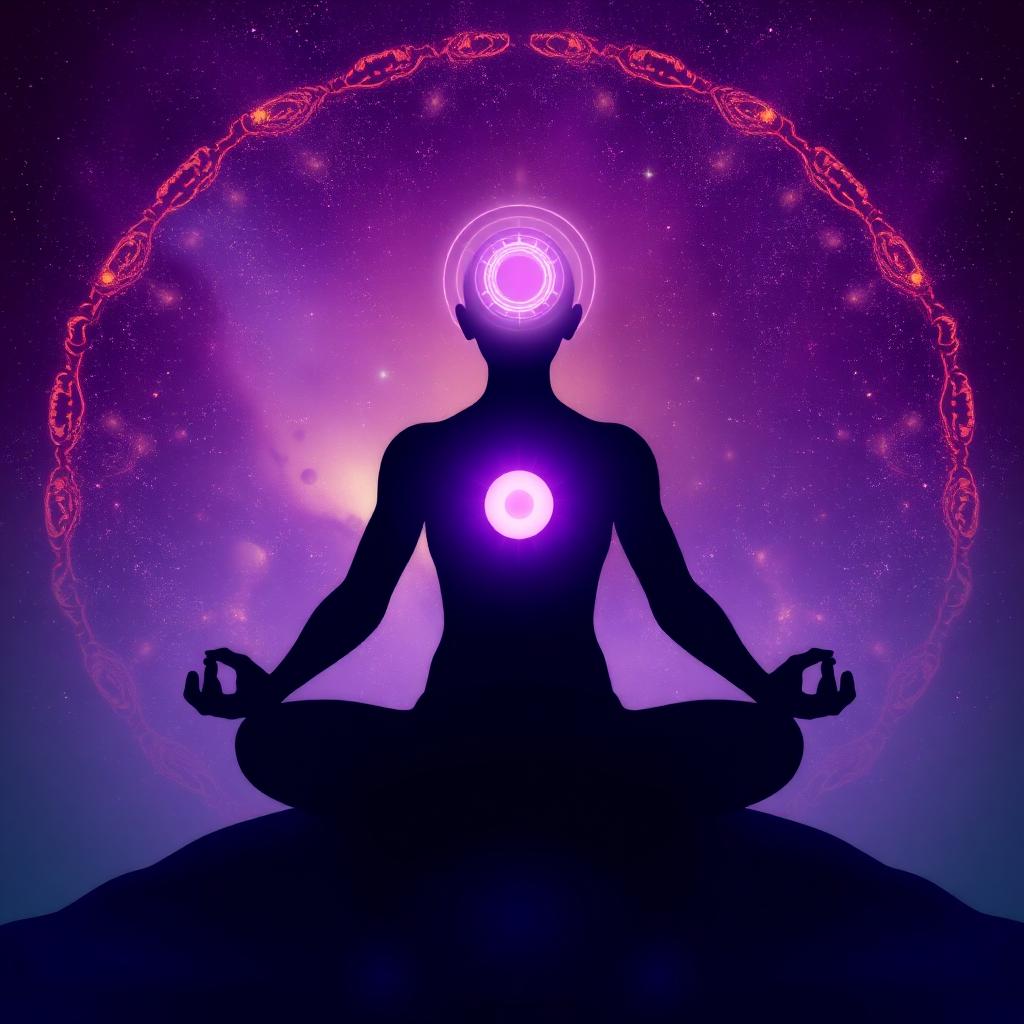
How to Activate Your Pineal Gland: A 5-Step Daily Routine
Pineal gland activation is best understood as supporting the gland's natural light-driven melatonin rhythm while training attention at the brow centre (ajna). Here is the daily routine used inside the Eye of God Awakening program.
- Morning light (5–10 min). Natural daylight soon after waking anchors the circadian clock that governs pineal melatonin release at night.
- Slow nasal breathing (2 min). Roughly four seconds in, six seconds out, to settle the nervous system before focus work.
- Third eye focus (10–15 min). Eyes closed, attention resting between the brows. Return gently each time the mind drifts — the returning is the training.
- Low-volume audio (optional). Theta-range or 528 Hz tones through headphones can help sustain attention; keep the volume comfortable.
- Sleep in full darkness. A dark room and a consistent bedtime do more for pineal function than any supplement.
What happens when the pineal gland is activated?
Practitioners commonly report pressure or warmth at the brow, more vivid dreams, deeper sleep and sharper intuition. The measurable, evidence-backed changes are in melatonin timing, heart-rate variability and attention networks — not in any structural change to the gland itself.
Can you decalcify the pineal gland?
Pineal calcification increases with age and is visible on brain scans, but no method is proven to reverse it. Reasonable, low-risk steps are limiting excess fluoride, getting daylight in the morning, sleeping in darkness and eating a nutrient-dense diet. Treat stronger claims as anecdotal, not established. Full breakdown in our guide on how to decalcify the pineal gland, and see our step-by-step guide on how to open your third eye.
Third Eye Opening Signs: What People Actually Report
The most common third eye opening signs described by long-term meditators fall into four clusters. None are diagnostic — they are subjective experiences that often accompany sustained third eye meditation.
| Sign | What It Feels Like | Likely Explanation |
|---|---|---|
| Brow pressure or tingling | Warmth, throbbing or a light 'point' between the eyebrows | Sustained attention to a body region heightens perceived sensation |
| Vivid or lucid dreams | Longer, more detailed, more memorable dreams | Improved sleep quality and REM recall |
| Heightened intuition | Faster 'knowing' in decisions and social reading | Better pattern recognition from a calmer, less reactive mind |
| Light sensitivity | Brightness feels stronger after practice | Pupillary and attentional shifts post-meditation |
| Emotional release | Unexpected tears, relief or old memories surfacing | Well-documented in contemplative practice literature |
| Inner stillness | A quiet, spacious background to thought | Reduced default-mode network chatter |
Persistent headaches, visual disturbance or dissociation are not awakening signs — pause the practice and speak with a clinician.
Core Ingredients of the Practice
| Component | Purpose | Time / Session |
|---|---|---|
| Third-eye visualization | Focused attention | 5–10 min |
| Box breathing (4-4-4-4) | Nervous-system regulation | 3–5 min |
| Solfeggio 963 Hz audio | State entrainment | 10–15 min |
| Intention setting | Directional focus | 2 min |
| Gratitude close | Positive affect anchoring | 1 min |
Scientific Evidence
Meditation-based interventions are among the most studied contemplative practices. A 2014 JAMA Internal Medicine meta-analysis found moderate evidence that mindfulness programs reduce anxiety, depression, and pain. Slow breathing at ~6 breaths/min is consistently linked to improved HRV in peer-reviewed research. Evidence for audio entrainment (binaural beats) is emerging and mixed — helpful for some, neutral for others.
Honest note: There is no peer-reviewed clinical trial on the "Eye of God Awakening" branded program itself. Benefits are inferred from its component practices, which each have supportive research bases.

Proven Benefits
- Reduced perceived stress
- Improved focus and mental clarity
- Better sleep onset
- Greater emotional regulation
- Higher self-reported life satisfaction
- Stronger creative & intuitive thinking
Potential Risks & Side Effects
The practice itself is low-risk, but any deep meditative work can occasionally surface uncomfortable emotions or memories. Rarely, extended silent meditation has been associated with dissociative or anxious episodes in vulnerable individuals (Britton et al., 2021). Start slow, keep sessions to 20 minutes for the first two weeks, and stop if you experience distress.
Interactions
No supplement or drug interactions — the program is entirely behavioral. If you use audio entrainment, avoid it while driving or operating machinery, and consult a doctor first if you have epilepsy.
Recommended Daily Dosage of Practice
| Level | Duration | Frequency |
|---|---|---|
| Beginner (weeks 1–2) | 10–15 min | Once daily |
| Intermediate (weeks 3–6) | 20 min | Once daily |
| Advanced | 20–30 min | Twice daily |
Best Time to Practice
Sunrise (around 5–7 a.m.) and pre-sleep (9–10 p.m.) are the two windows most commonly recommended. Morning practice sets intention; evening practice supports parasympathetic recovery and deeper sleep.

Who May Benefit
- Knowledge workers seeking sustained focus
- People navigating high-stress life transitions
- Meditators looking for structured progression
- Anyone drawn to intentional, meaning-centered living
Who Should Avoid It (or Consult First)
- Individuals with photosensitive epilepsy (audio/visual entrainment)
- Active psychosis, severe untreated PTSD, or dissociative disorders
- Anyone advised against meditation by a mental-health professional
Comparison of Practice Formats
| Format | Best For | Trade-off |
|---|---|---|
| Guided audio | Beginners | Requires headphones |
| Silent self-led | Experienced meditators | Less structure |
| Group/live | Accountability | Fixed schedule |
How to Choose a High-Quality Program
- Clearly stated teacher credentials and lineage
- Transparent refund policy
- Progressive difficulty — not a single 60-minute file
- Realistic claims (no "manifest a Ferrari in 24 hours")
- Verified user testimonials
Ready to experience it for yourself?
Access the AwakeningCommon Mistakes
- Starting with 60-minute sessions and burning out by day 4
- Skipping the breathing component
- Expecting supernatural results in 24 hours
- Practicing sporadically instead of daily
- Doing sessions in a noisy, distracting environment
Myths vs. Facts
| Myth | Fact |
|---|---|
| You'll see visions in day 1 | Subtle shifts first; deeper states take weeks |
| It replaces medical care | It complements, never replaces, professional care |
| You need to be spiritual | Anyone open to focused attention benefits |
Frequently Asked Questions
What is the Eye of God Awakening?
A structured guided practice combining focused meditation, breathwork and sound entrainment to help cultivate clarity, intuition and manifestation ability.
How long until I feel a difference?
Most people notice calmer focus and improved sleep within 7 days of daily 15-minute sessions.
Do I need special equipment?
Only headphones and a quiet space. No supplements or devices required.
Can it help with anxiety?
The underlying components (mindfulness, slow breathing) have moderate research support for reducing anxiety symptoms.
Is it religious?
No. It draws on universal contemplative principles and is compatible with any (or no) faith tradition.
Can children practice it?
Short (5-minute) breathing components are child-friendly; the full program is designed for adults.
Does it work during pregnancy?
Gentle meditation and slow breathing are generally safe; skip intense breath retention and consult your provider.
What if I fall asleep?
Completely normal, especially in the first weeks — your nervous system is releasing accumulated tension.
Is there scientific proof?
Not for the branded program specifically, but each component (meditation, breathwork, entrainment) has supportive research.
Money-back guarantee?
Check the current offer page for the most up-to-date refund policy.
How much time daily?
15–20 minutes is the sweet spot for most people.
Can I combine it with yoga?
Yes — it pairs naturally with any embodied practice.
How do you activate your pineal gland?
Morning daylight, 15–20 minutes of daily third eye focus meditation, slow nasal breathing, optional low-volume theta or 528 Hz audio, and sleeping in complete darkness at a consistent time.
What happens when the pineal gland is activated?
People report brow pressure, vivid dreams, deeper sleep and sharper intuition. Measurably, the changes relate to melatonin rhythm, heart-rate variability and attention networks.
What are the signs of third eye opening?
The most reported third eye opening signs are brow tingling or pressure, vivid or lucid dreams, heightened intuition, light sensitivity, emotional release and a sense of inner stillness.
Can you decalcify the pineal gland?
No method is proven to reverse pineal calcification. Limiting excess fluoride, morning daylight, dark sleep and a nutrient-dense diet are sensible, low-risk supports.
How long does pineal gland activation take?
Most practitioners describe early shifts in sleep and focus within 7–14 days of consistent daily practice; deeper changes are usually described after 30–60 days.
How can I activate my pineal gland in 5 minutes?
A five-minute version: two minutes of slow nasal breathing (4 seconds in, 6 seconds out), two minutes of steady attention at the brow centre with eyes closed, then one minute of simply resting. It is a primer, not a replacement for the full 15–20 minute session.
What does the pineal gland actually do?
The pineal gland is a pea-sized endocrine gland in the middle of the brain that releases melatonin in response to darkness, setting sleep and circadian timing. Contemplative traditions associate the same area with the third eye or ajna centre.
Is pineal gland calcification reversible?
Calcification is common with age and visible on scans, and no method is proven to reverse it. Lower-risk supports are limiting excess fluoride, daylight in the morning, dark sleep and a nutrient-dense diet.
Key Takeaways
- The Eye of God Awakening is a behavioral, not chemical, practice — low risk, high potential.
- Its components (meditation, breathwork, sound) each have supportive scientific research.
- Consistency (15–20 min daily) outperforms occasional long sessions.
- Realistic expectations produce the most durable results.
Awaken Your Inner Vision Today
The Eye of God Awakening is not a shortcut — it's a structured, honest path to a calmer, clearer, more intentional life. Begin with fifteen minutes tomorrow morning.